Culture, tradition & imagination
Living roots. An imagined future.
Aiyé asks what a future can carry: the voices of a neighbourhood, a family's obligations, sacred meaning, artistic invention. Here is how to enter that conversation with curiosity and care.
The novel is fiction. Its cultural roots belong to real people, places and histories. Keeping both in view makes the world richer to read.
Start with respect
These roots are alive.
Aiyé draws on cultural and spiritual traditions that exist beyond the novel. Yoruba heritage is not one uniform set of beliefs: religious practice, artistic expression and community life have many forms. The book is one work of imagination, not an authority that can speak for everyone who lives within that heritage.
The Met's account of Ife describes both the city's significance in Yoruba history and the plurality of Yoruba religious life. That is a useful starting point for a reader: distinguish the living place and its people from the fictional institutions and events encountered in the saga.
You can enjoy the story without arriving with a mythology handbook. Curiosity is welcome. So is the understanding that a fictional explanation of a power is not a complete account of the tradition whose name it carries.
Historical context: Ife — The Metropolitan Museum of Art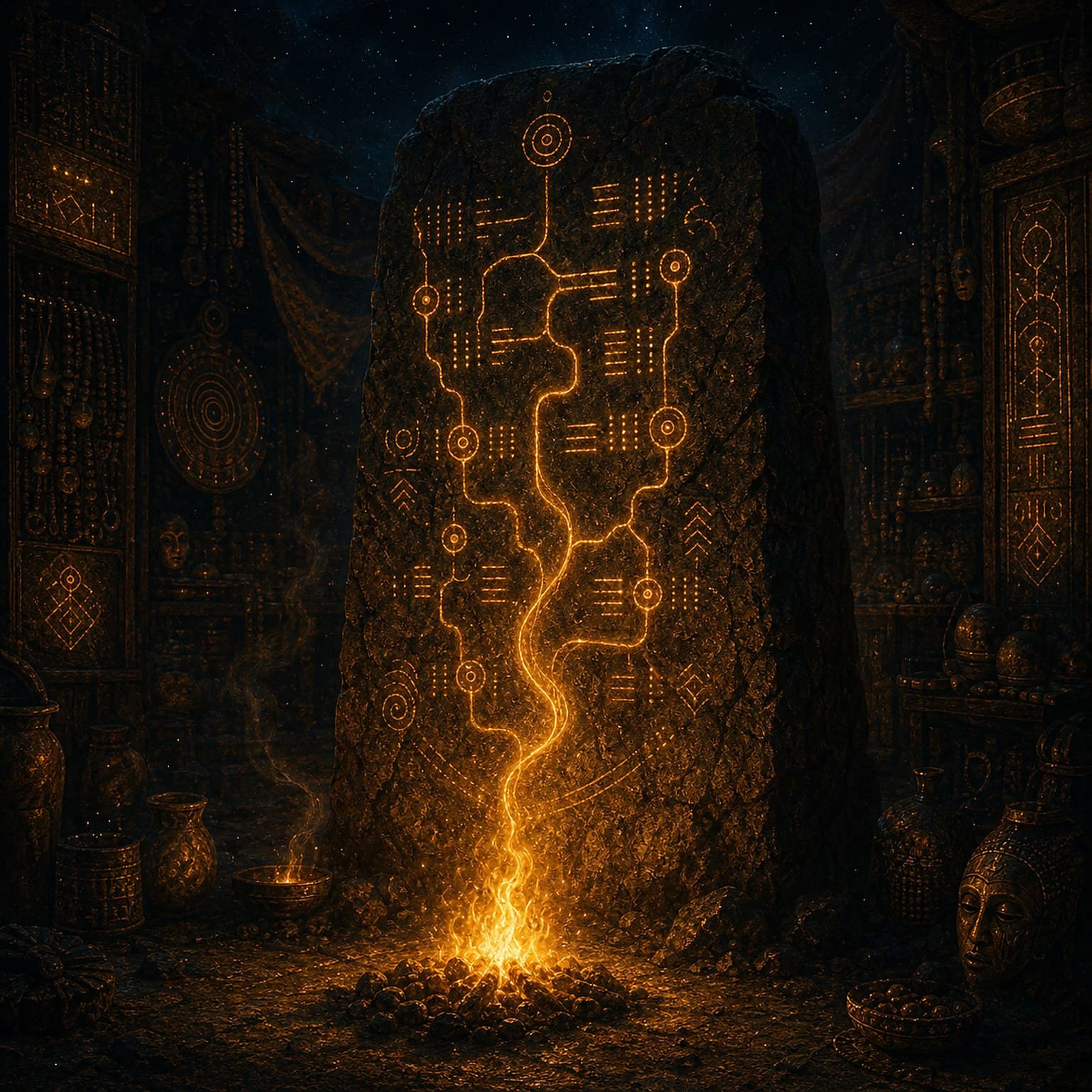
Know the distinction
Inheritance and invention.
The story brings divine names, memory, family and sacred meaning into a speculative setting. Its engineered Frames, monitoring technology, Ministry of Divine Affairs and combat systems belong to that fiction. They are not descriptions of how real communities practise religion.
Even within the novel, a Frame is not an Òrìṣà. The Frame is the engineered vessel; the Òrìṣà is the divine being whose power it carries. Keeping those categories separate lets the reader understand the story without reducing a divine figure to a piece of equipment.
The distinction matters across the wider world too. Nigeria and West Africa contain many traditions. Similar images, powers or materials are not permission to collapse different peoples and divinities into one interchangeable mythology. Aiyé's own canon has to earn each connection it makes.

Hear the people
Culture in the ordinary sentence.
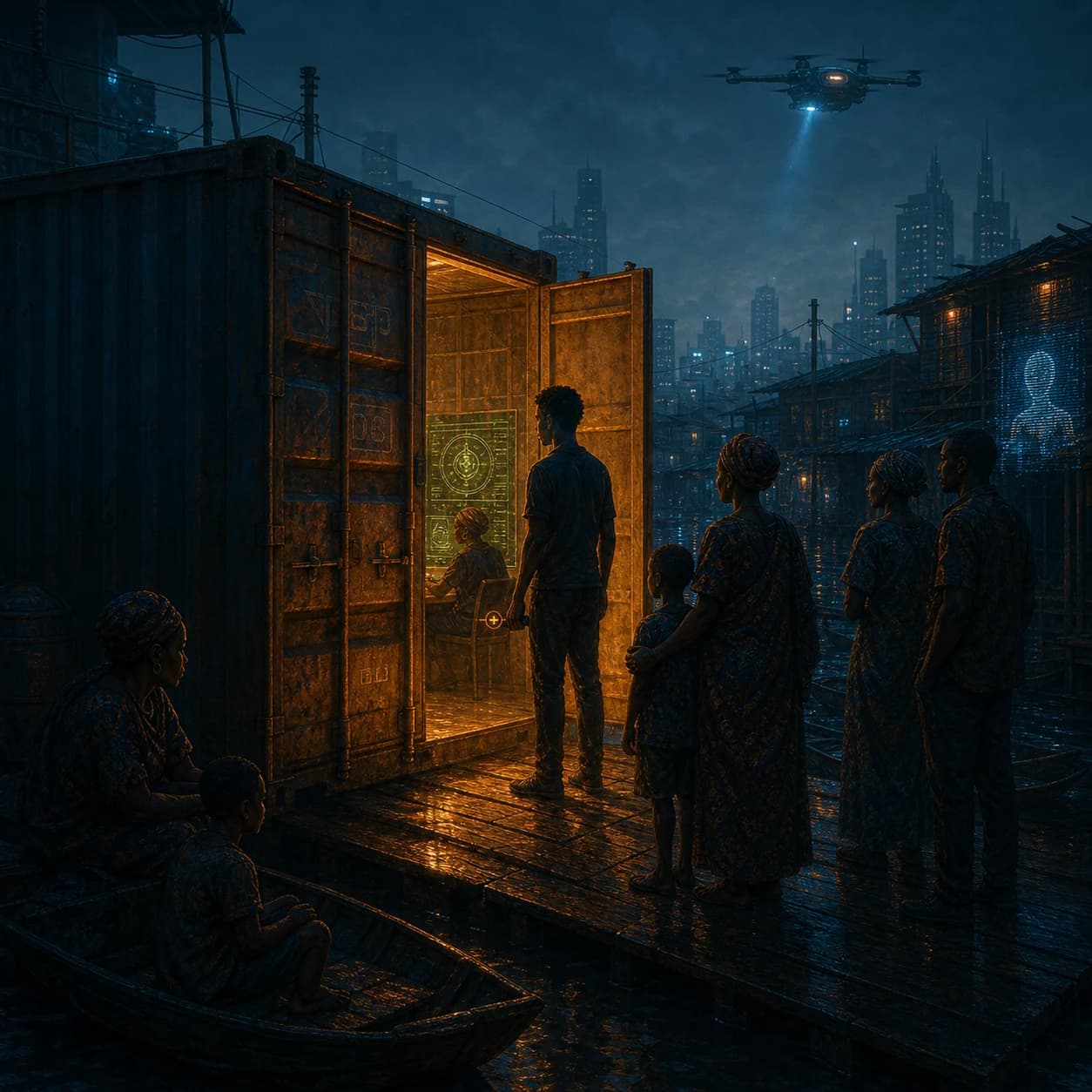
In the opening chapter, a conversation between brothers travels over a bead-com in Pidgin. Food sellers interrupt the street. A mother's words survive inside her son's memory. The cultural life is already moving before the reader encounters a formal explanation of the supernatural.
Later, an assessment morning still has room for food, teasing and nerves. Those scenes matter because a person cannot be understood only through an ability, a bloodline or an official role. The way someone jokes, addresses an elder, notices hunger or makes a home also tells you who they are.
English, Yoruba and Nigerian Pidgin have different work to do in the prose. Read for relationship and situation as well as literal meaning. This guide does not invent translations or turn a character's personal words into a supposedly traditional saying.
Look with attention
A tradition has makers.
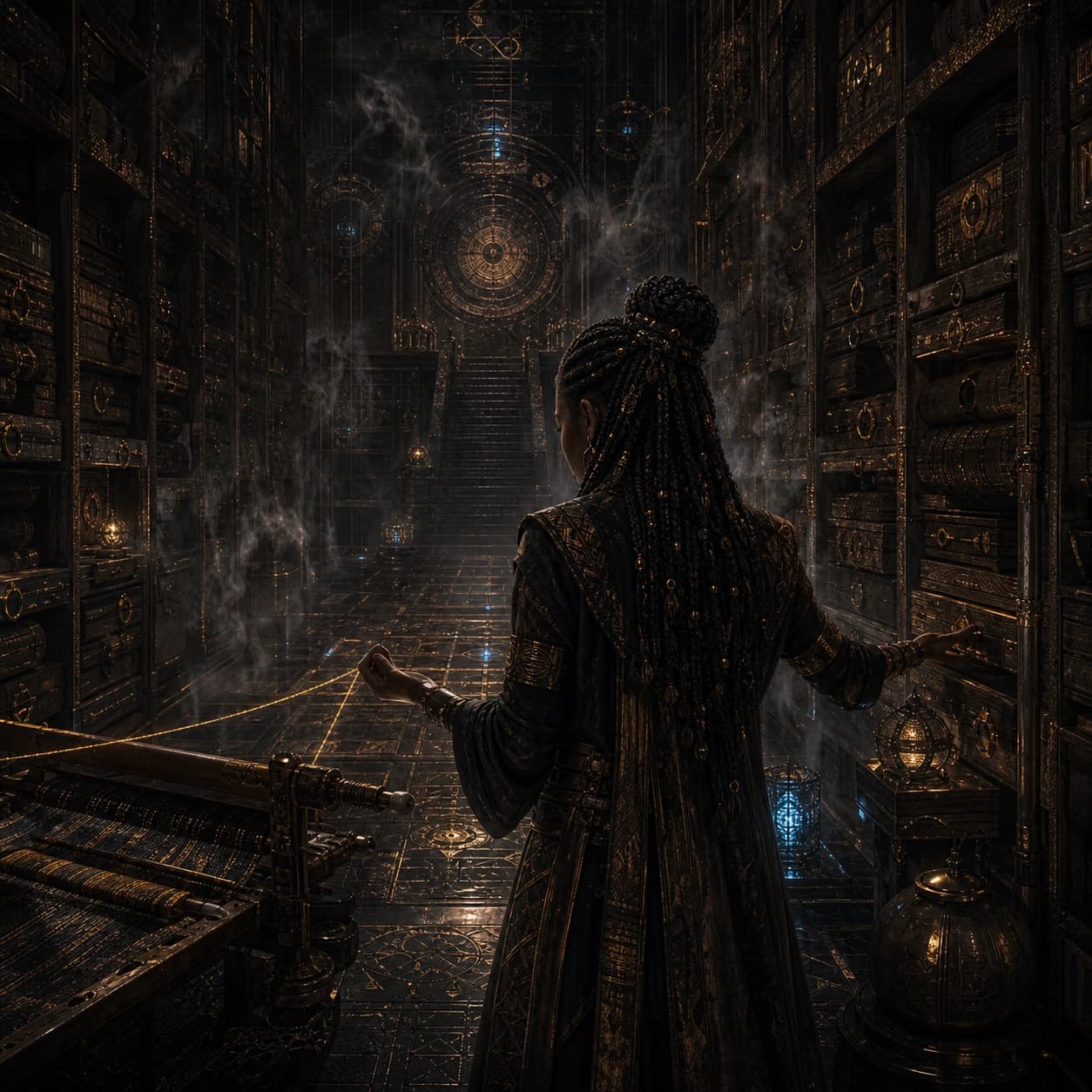
The carved surfaces and monumental spaces in Aiyé's illustrations invite a closer look at real artistic histories, but the plates are fictional production art. They should not be mistaken for photographs of historical sites, ritual objects or documented ceremonies.
Consider a real work alongside them: Ọlọ́wẹ̀ of Ìsẹ̀'s carved palace door, documented by The Met. Its figures, patterned surfaces and historical subject are the choices of a named artist working for a patron. African artistic heritage includes individual invention, skill and authorship.
That example is an invitation to seek the people behind the forms, not a claim that Aiyé reproduces that artist's work. When the gallery points out a carved threshold or a pattern of light, it is discussing the illustration in front of you. Historical and spiritual claims need their own evidence.
A named artist: Ọlọ́wẹ̀ of Ìsẹ̀'s palace door — The Met