The creator’s vision
A world to inherit. A future to imagine.
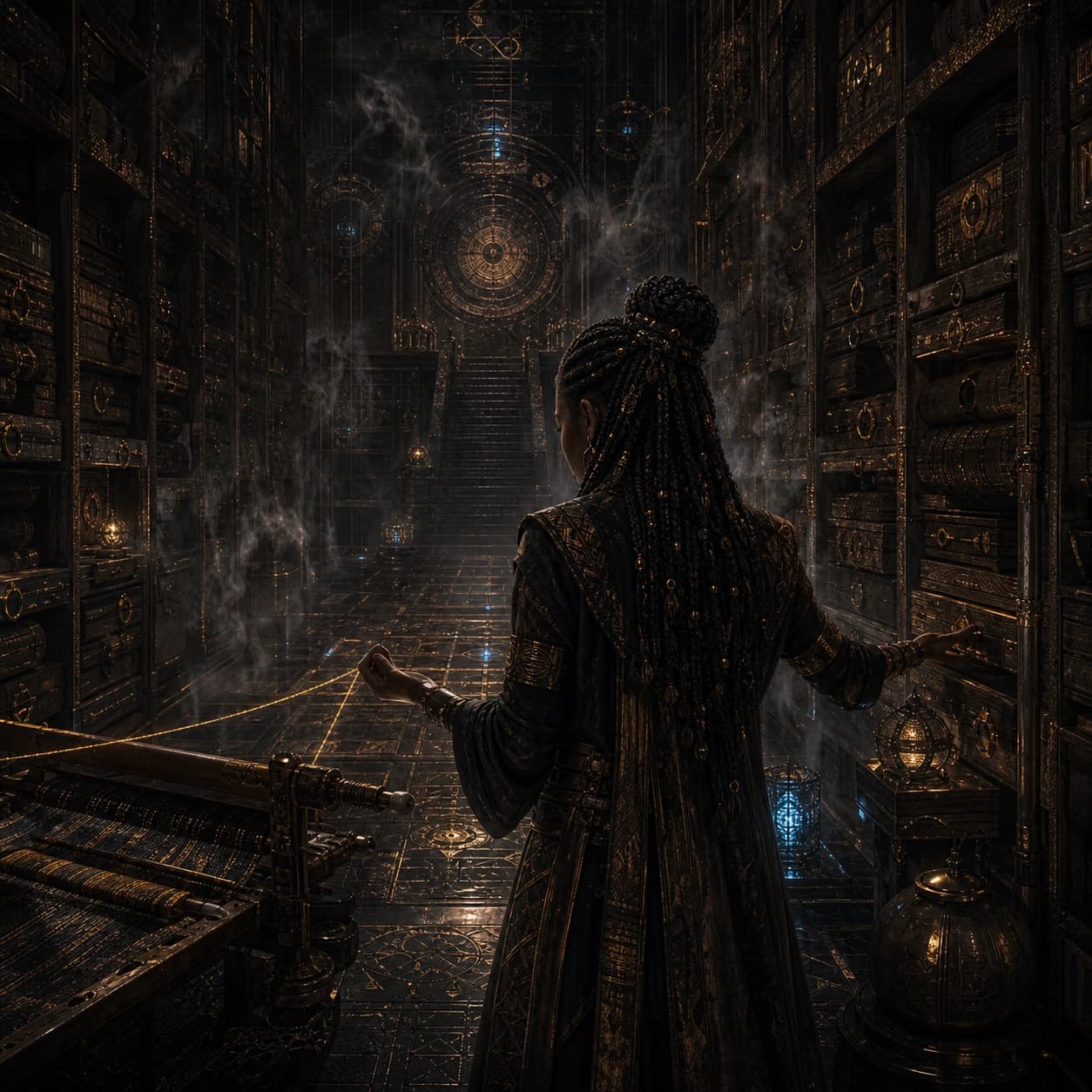
Why build Aiyé? To give a Nigerian story the room to become a world: intimate enough to feel like home, expansive enough to keep surprising you.
The vision / In the author’s words
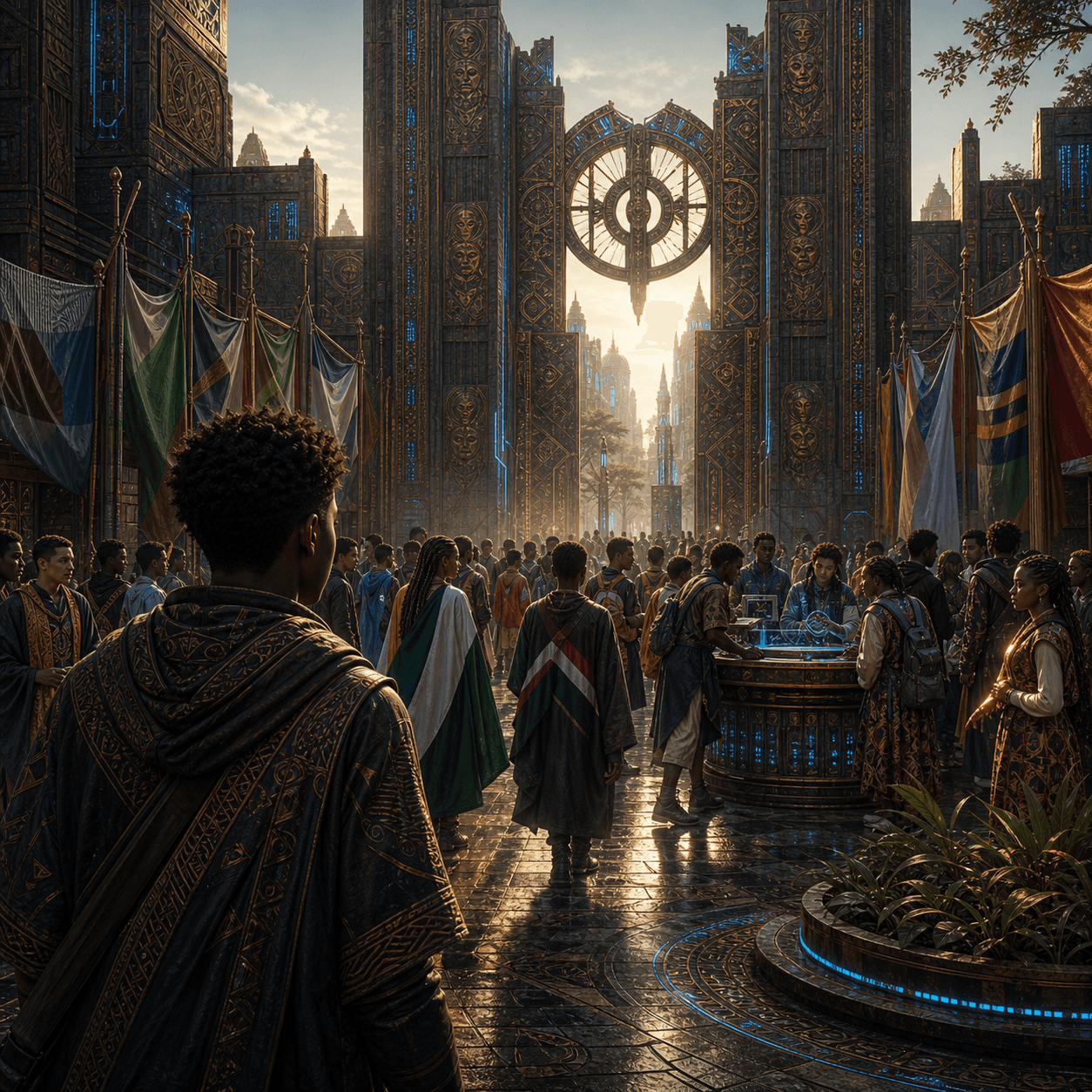
Chronicles of Aiye is not another African-inspired fantasy. It is a Nigerian myth-tech storyworld built to do for West African cosmology what the great Eastern serials and Western epics did for their own mythological foundations: make an entire world believable, inhabitable and generationally renewable.
The reason
A future with room for us.
Fiction gives cultures a place to imagine themselves at impossible scale. It lets a neighbourhood become the centre of a universe, a family history become an epic, and a familiar voice speak inside a future nobody has seen yet. Aiyé was created to claim that imaginative room for a Nigerian story.
The ambition is larger than putting African names into a familiar fantasy. Culture should shape what people build, how authority works, what a promise means, what a family asks of its children, and what power costs. Those choices have to move the story. They cannot remain decoration around it.
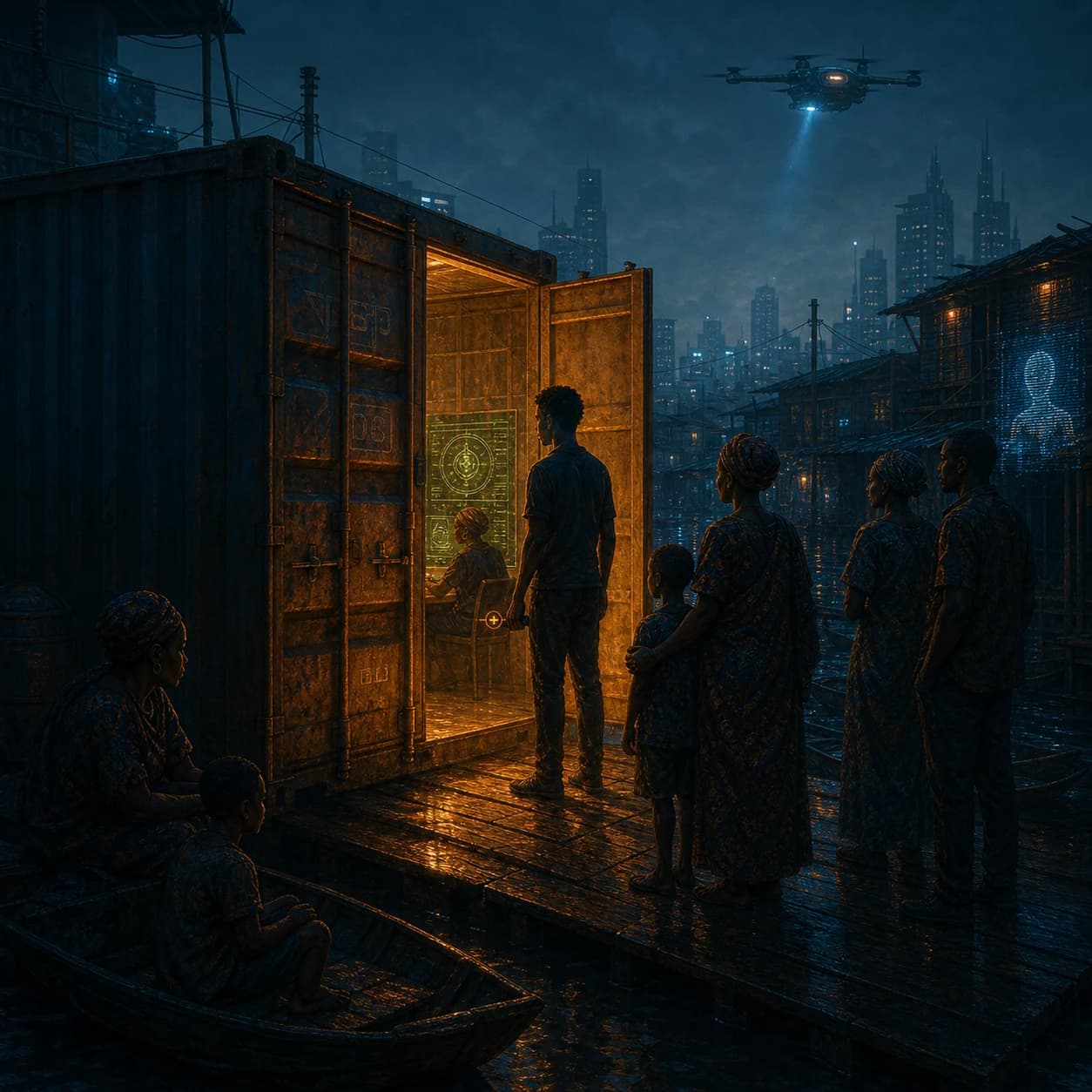
That is why the saga begins on a street, with a boy holding on to names, before it asks the reader to face an impossible inheritance. The doorway is intimate. The world beyond it is meant to be vast.
The commitment
Let the whole life in.
A civilisation is more than its battles and its gods. It has food, jokes, gossip, class, clothes, work, institutions, arguments and family obligations. The creative doctrine asks Aiyé to carry all of that into its speculative future. An auntie's demand and a commander's decision both belong to the world.
The ordinary scenes give spectacle somewhere to land. A reader who has laughed with a sibling or watched someone make sure another person eats has a reason to worry when danger arrives. The characters must be allowed to be awkward, ambitious, funny, proud and wrong as well as extraordinary.
This is also a promise about scale. Modern technology, elite institutions, cities and cosmic danger do not have to make an African story less itself. The particular life of the place should become more visible as the world grows.
The craft
Familiar excitement. Its own soul.
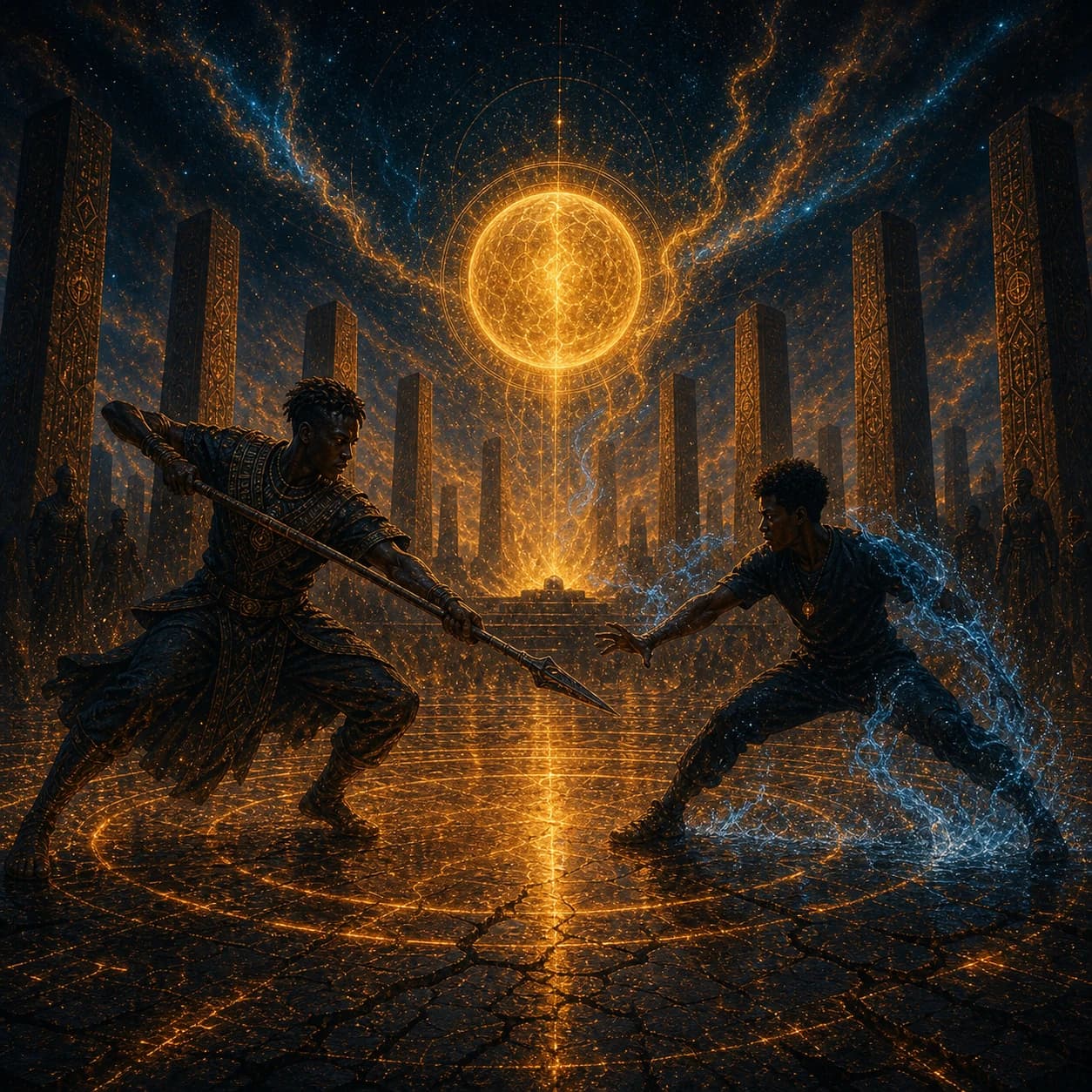
The author names anime and the great serial sagas as models for how culturally specific storytelling can travel. Training, rivalry, hidden inheritance, found family and the escalating cost of power are pleasures many readers already recognise. They make a doorway, not a blueprint for copying someone else's world.
Aiyé's task is to let Nigerian social life, sacred engineering, family consequence and its own characters determine what happens beyond that doorway. A trial has to change someone. An institution has to have power over a life. A victory has to leave a consequence that the next chapter cannot quietly erase.
The desired response is recognition followed by discovery: you understand why the story is exciting, then encounter people, images and choices that belong to this world in particular.
The horizon
A world people can keep returning to.
The vision is a storyworld that can sustain more than one book and more than one generation of readers. That requires continuity: the characters, rules and consequences must still mean something when the format changes or the story widens.
The novels are the foundation. Illustration lets readers spend time with a place; the archive offers another way to understand a person or a system. Screen and sound development are ambitions with their own production work, not substitutes for a finished story or promises of releases that do not yet exist.
The invitation is to begin wherever curiosity catches: a sentence, a face, a building, a difficult choice. Read the opening. Look closely at the art. Find someone you want to understand. There is no required identity, pledge or level of expertise. Belonging can start with wanting to know what happens next.